
Originally broadcast on BFM 89.9 – The Business Station: 🎙️ Listen to the Full Conversation: Sheila Singam discusses Workplace Psychological Safety on BFM 89.9’s Raise Your Game podcast with Freda Liu. (Run time: 21:07 mins). Published on 27 September 2021.
Key Takeaways
- Workplace Psychological Safety as a Strategic Growth Driver: Workplace psychological safety is a critical business mechanism that eliminates costly workplace silence, reduces employee turnover by up to 27%, and increases overall productivity by 12%.
- The High Cost of Impression Management: When organisational culture suppresses open discourse, employees default to self-protection—expending cognitive energy on managing their professional image rather than driving product or operational innovation.
- Independent Governance Architecture: C-Level leadership must establish third-party, independent whistleblowing and governance channels to ensure unvarnished operational transparency without the risk of internal management retaliation.
- Rank-Blind Innovation Incubators: Organisations must institutionalise dedicated ideation sessions where strategic proposals are evaluated strictly on merit and business viability rather than corporate hierarchy.
- Enforced Relational Protocols in Meetings: Executive leaders need to eliminate subtle micro-sabotages by enforcing strict meeting ground rules that ban interruptions, eliminate personal blame games, and equalise administrative tasks.
- Reframing Mistakes into Systemic Diagnostics: Leaders must shift the language surrounding operational failures away from individual fault and toward process optimisation to build a resilient, learning-orientated culture.
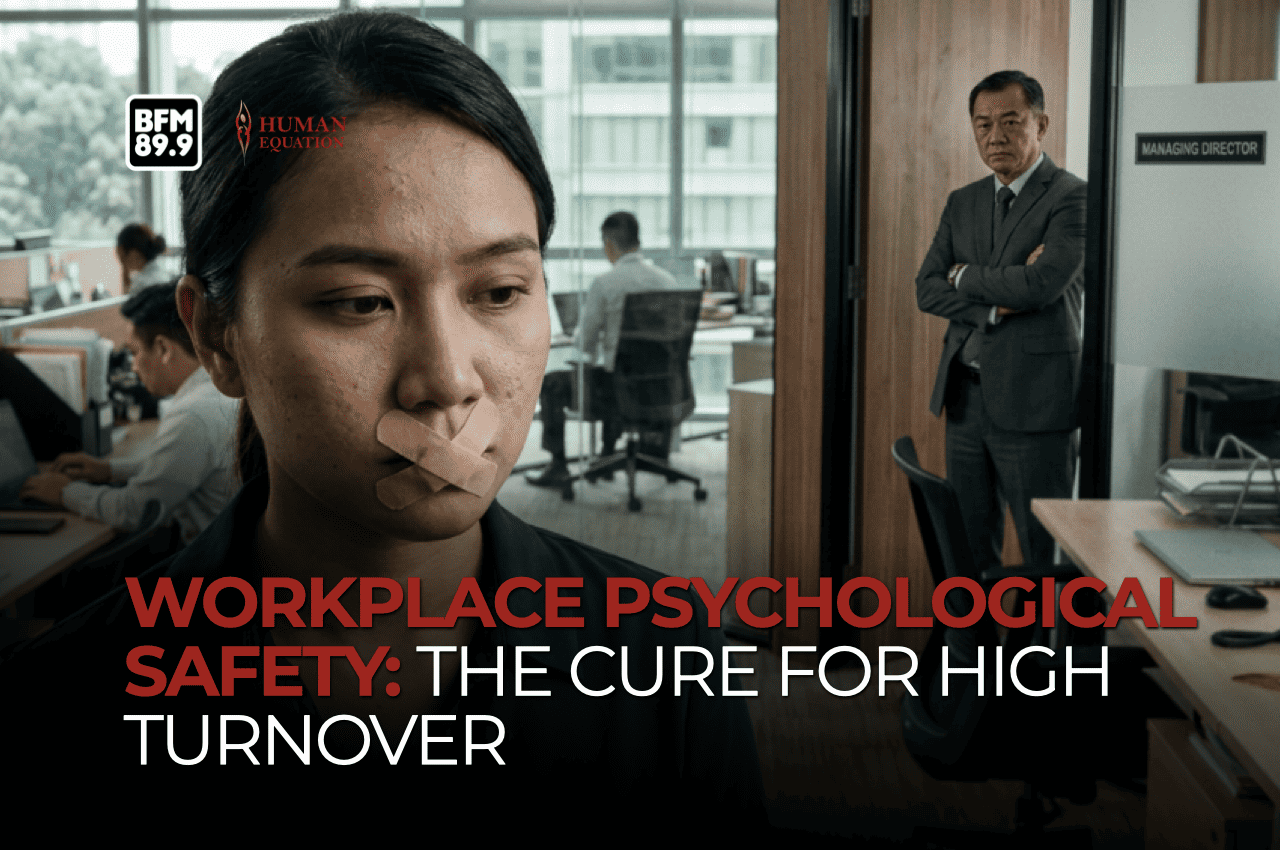
Have you ever noticed how some leaders boast about their open-door policies, yet their boardrooms remain entirely silent? We’ve all been there—sitting in a meeting where an obvious problem is staring everyone in the face, but nobody says a word.
It got me thinking about an old story from ancient times.

The Armenian king, Tigranes, killed the very first messenger who brought him news of a massive, advancing enemy army. Needless to say, after that gruesome display, no other messenger wanted to bring him the bad news. So, without a single shred of intelligence or honest feedback, the king sat in blissful ignorance while the war blazed right around him, giving his ear only to those who flattered him.
Does that dynamic sound familiar?
1. The Illusion of the Open Door
When leaders tell me, “I give my people the opportunity to speak, but no one wants to step up,” I tell them they are looking at the wrong problem.
Unlocking the cage door does absolutely nothing if the occupant has been conditioned to stay inside. The truth is, most of us enter the workforce already wearing heavy chains of cultural and societal conditioning.
Harvard organisational behavioural scientist Amy Edmondson defined it as the subconscious habit of constantly managing the image other people have of us. But in plain English? It’s the exhausting corporate self-defence mechanism where we spend all our energy trying to look competent, agreeable, and composed—even when the ship is sinking.
It starts long before we ever set foot in an office. We’ve been conditioned by a patriarchal society, authoritarian homes, and a school system that taught us to keep quiet, sit still, and never ask silly questions. By the time we enter the workplace, that conditioning becomes second nature.
Impression management is the inner dialogue that warns us:
- “Better not ask questions, or people will think I’m ignorant.”
- “I shouldn’t admit a mistake, or people will assume I’m incompetent.”
- “Don’t offer new ideas, or people might feel threatened and see me as being too kaypoh (a busybody).”
- “Best not to challenge the status quo, or I’ll offend authority.”
So, we put on our masks, play it safe, and retreat into workplace silence.
Impression management is a corporate self-defence mechanism. When employees waste all their cognitive energy trying to look perfect, they stop trying to be innovative.
2. The Subtle Saboteurs of Safety
Psychological safety isn’t destroyed by massive corporate scandals; it bleeds out slowly through tiny, unchecked daily behaviours.
I see leaders commit these micro-sabotages all the time without even realising the damage they are doing.
- The Multi-Tasking Disrespect: Take the executive who thinks it is their absolute prerogative to answer the phone or scroll through messages during a team member’s pitch. What signal does that send? It screams that the person speaking is entirely expendable.
- The “Minute-Taking” Trap: Or consider the subtle, systemic bias of automatically expecting the woman in the room to take the minutes and handle the administrative notes.
- The Post-Meeting Retribution: The most toxic saboteur. A leader will stand up at a town hall and practically beg for transparency, but the moment a brave manager brings up a genuine concern, that manager is taken aside offsite. The leader whispers fiercely, “Why did you bring that up? You made me and my department look bad.”
You simply cannot demand absolute transparency and then penalise the people who actually practise it.
3. The Generational Flashpoint
This culture of silence is hitting a massive wall today, and that wall is the younger workforce.
Many leaders from the Baby Boomer and Gen X generations come to me complaining that Millennials and Gen Z are “entitled” or “difficult” to manage.
I completely disagree.
The younger generation simply marches to the beat of a different drummer.
As social media natives, they are highly accustomed to speaking out in the public domain, and they carry a deeply rooted, authentic value system. They don’t carry the same rigid filter of impression management that older generations do, so they speak up to bring about constructive change.
But when their fantastic ideas are met with legacy pushback—“You’re young, you don’t know anything, we have years of wisdom”—the friction begins.
If you consistently tell them to keep quiet, they won’t just sit in the cage.
They will leave.
A prolonged lack of psychological safety drives turnover through the roof, causing you to lose your best young talent and the innovative future of your firm.
4. Dismantling the Termites
A lack of psychological safety acts exactly like termites at the bottom of a building.
The structure can look highly profitable, beautiful, and solid on the outside, but the termites are quietly eating away at the core until the foundation suddenly crumbles into dust.
If you only want favourable financial reports and refuse to hear the ripples and rumbles of unfair treatment, bullying, or operational mistakes, you are blindly asking for trouble.
To save the foundation, institutions must move from passive approachability to active structural safety.
The Blueprint for Psychological Safety that Halts Turnover and Ignites Growth
1. Establish Independent Governance Units
- The Structural Fix: An internal whistleblower unit parked within HR is an inherent paradox because it answers to the macro-administration. To make reporting safe, place it under an independent, outsourced group completely outside the mainstream organisation.
- Self-Evaluating Question: If an employee discovered a serious ethical breach by my direct report tomorrow, would they trust our internal HR process enough to report it, or would they stay silent out of fear of retaliation?
- Immediate Action: Audit your current whistleblowing framework. If it routes entirely through internal management or internal HR, draft a proposal to benchmark and transition to a third-party, confidential corporate reporting service.
2. Launch Innovation Incubators
- The Structural Fix: Create a regular, dedicated monthly space specifically designed to brainstorm problems and improve solutions, where ideas are evaluated strictly on merit and completely decoupled from corporate rank.
- Self-Evaluating Question: Do our ideation sessions favour the loudest, most senior voices in the room, or do we actively create an equal platform for our younger digital natives to disrupt our status quo?
- Immediate Action: Schedule a monthly “Zero-Rank Brainstorm” beginning next month. Appoint a rotating facilitator, set a specific operational problem to solve, and mandate that all ideas are submitted anonymously on index cards or digital boards before discussion begins.
3. Enforce Meeting Ground Rules
- The Structural Fix: Set non-negotiable relational protocols for every interaction—absolutely no interruptions, no profanities, no blaming, and zero tolerance for sexist or racist remarks.
- Self-Evaluating Question: Am I guilty of micro-sabotages—like checking my phone, cutting people off mid-sentence, or unconsciously defaulting to the women in the room to take our meeting notes?
- Immediate Action: At the very start of your next team alignment meeting, display three clear ground rules on the screen: No interruptions, no tracking of blame, and rotating administrative duties. Openly invite the team to call you out if you break them.
4. Refine the Language of Failure
- The Structural Fix: Reframe every single mistake or operational failure as a collective learning experience rather than an opportunity to play the blame game.
- Self-Evaluating Question: When a project misses its deadline or target, is my instinctive first question “Who messed up?” or “What systemic gap caused this, and what can we learn?”
- Immediate Action: The next time an operational error occurs, ban the word “who” from the post-mortem discussion. Force the diagnostic dialogue to focus entirely on process mapping: Where did the workflow break down, and how do we insulate the system next time?
If this dynamic sounds familiar to what your team is navigating right now, let’s chat. Send a quick message to our team at Human Equation, and let’s figure out how to bring the human element back into your strategy.
Frequently Asked Questions
How do I know if my team lacks workplace psychological safety if everyone remains silent?
Workplace silence is the ultimate symptom of a safety deficit. Leaders often mistake a quiet meeting for a peaceful or aligned team. In reality, employees are practising what Harvard’s Amy Edmondson calls “impression management”—actively choosing self-protection over innovation to avoid looking incompetent, disruptive, or kaypoh (a busybody). If your team never asks questions, never admits mistakes, and never voices a contrary opinion during planning sessions, you do not have consensus; you have a cage of silence driven by an underlying fear of vulnerability.
What is the fastest way for a manager to build workplace psychological safety during a crisis?
The quickest path to building trust is through radical leader humility and shifting how failure is addressed. Instead of acting like the emperor with the new clothes who only demands flawless reports, start your next team meeting by openly sharing a personal mistake or strategic gap you are currently navigating. When a leader explicitly states, “I don’t have all the answers for this roadblock—what are your thoughts?” it shatters the patriarchal conditioning that demands perfection and instantly gives the team structural permission to speak up without fear of retribution.
How does a lack of workplace psychological safety directly drive high employee turnover?
When an enterprise environment lacks safety, it triggers an ongoing interpersonal threat response. High-performing employees—particularly social media-native Millennials and Gen Z who march to a different drummer—will not tolerate prolonged corporate silence or veiled threats. If their ideas are consistently dismissed or met with subtle micro-sabotages (like a manager checking their phone during a pitch), they will quietly disengage. The structural result is a spike in voluntary turnover rates, as top talent takes their innovative capabilities to competitors who value psychological health as much as productivity.
Does focusing on workplace psychological safety mean I have to lower my team’s performance standards?
This is the single biggest misconception among modern executives. Psychological safety is absolutely not about being “nice,” lowering accountability, or creating a consequence-free environment. True safety means separating accountability for fixing an operational issue from the toxic blame game of punishing the person. It establishes a high-performance framework where leaders can hold employees to rigorous strategic outcomes precisely because the team feels entirely safe to engage in constructive conflict, flag systemic risks early, and pitch bold, disruptive solutions.
What concrete meeting ground rules can immediately improve workplace psychological safety?
Shifting a workplace culture requires clear, non-negotiable relational protocols enforced in real-time. To unlock immediate dialogue, implement three strict structural rules for your next executive session:
- Rotate Administrative Roles: Ban the subtle systemic bias of automatically assigning minute-taking or scheduling duties based on gender or junior rank.
- Zero Interruptions: No one speaks over a colleague; every perspective is given undivided attention.
- Challenge Ideas, Not People: Decouple the individual’s worth from the merit of their strategy to remove personal risk.


